
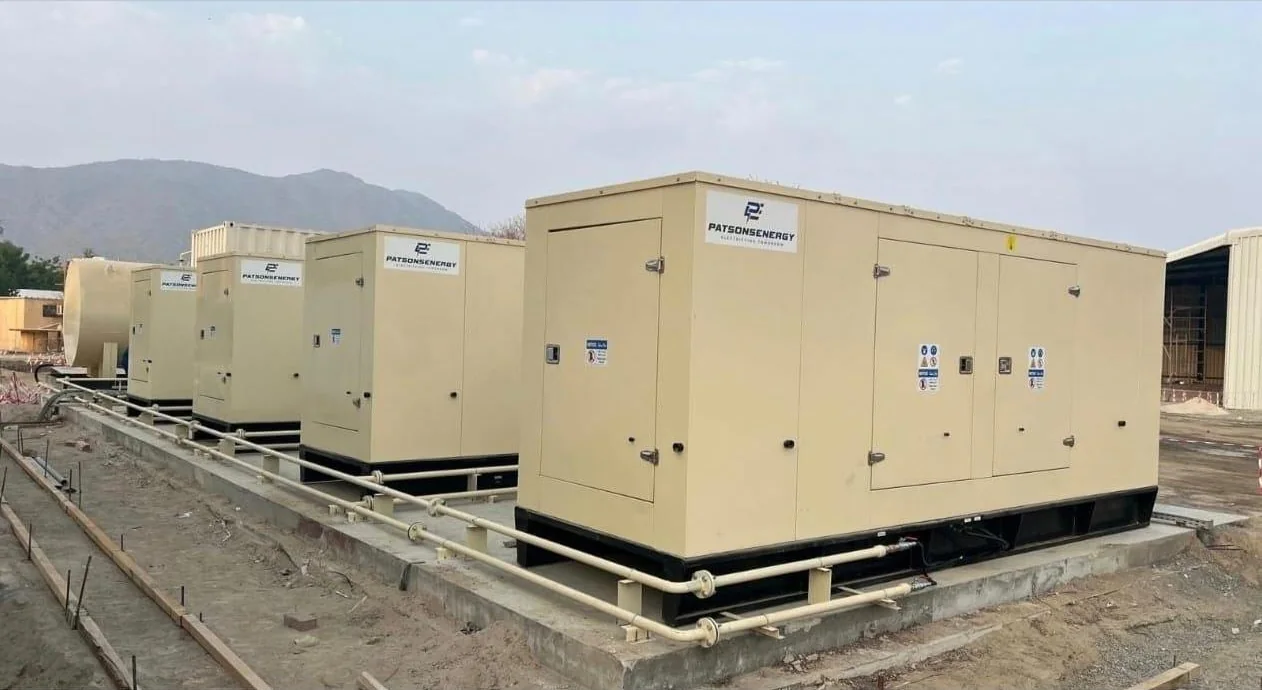
Controls & parallel power
Multi-generator controls for reliable parallel operation.
We integrate synchronization and load-sharing controls for multi-generator systems. The design starts with how the plant should operate, then connects controllers, switchgear, protection, metering and remote signals.
System architectures
Start with the way the system needs to operate
Generator-to-generator
Two or more sets synchronize to a common bus and share active and reactive load.
Standby sequencing
Sets start, connect and stop according to available capacity, load demand and redundancy rules.
Mains parallel
Short- or long-term utility paralleling where the network operator, protection and project rules permit.
Priority & shedding
Load groups connect or disconnect according to available generation and the project’s priority schedule.
Required inputs
Agree the operating sequence before programming begins
- Single-line diagram and switchgear ownership boundaries
- Number, rating and controller type of each generator
- Normal, emergency and maintenance operating modes
- Redundancy target and minimum online reserve
- Load-add, load-shed and restoration priorities
- Utility interface and permitted parallel conditions
- Protection, interlock and breaker-control requirements
- BMS, SCADA or remote-monitoring point schedule
Functional testing
Test the full sequence, not just the panel wiring
A parallel system test should demonstrate start permissives, synchronization, breaker operation, load sharing, set sequencing, failure response and return to normal operation. Simulated faults are agreed in advance so testing is controlled and repeatable.
Where complete site switchgear is not available in the factory, interfaces can be simulated and then verified again during commissioning. The test record should make that boundary clear.
- 01
Point-to-point
Check field wiring, breaker controls, permissives and status feedback.
- 02
Sequence simulation
Run the agreed operating modes and interlocks before applying load.
- 03
Parallel test
Synchronize available sets and observe active and reactive load sharing.
- 04
Failure response
Confirm alarms, set rejection, reserve start and load shedding where included.
- 05
Site integration
Verify live interfaces with switchgear, utility, BMS or SCADA under the commissioning plan.
Frequently asked questions
Common questions
Can’t find what you need? Send us your requirement and our team will help.
What is generator synchronization?
Synchronization matches voltage, frequency and phase before a generator breaker closes onto an energized bus. Once connected, the controls regulate active and reactive load sharing.
Can generators of different sizes run in parallel?
They can in some systems, but the controller capability, governor and AVR response, load-sharing method, protection and minimum loading must be reviewed. Compatibility should not be assumed.
Can a synchronization panel communicate with a BMS or SCADA system?
Yes. Hardwired points or supported digital protocols can be coordinated against an agreed point list and responsibility matrix.
Is load-bank testing enough for a parallel system?
A load bank verifies generator loading, but the complete system also needs sequence, breaker, protection, interlock, communications and failure-response testing.