
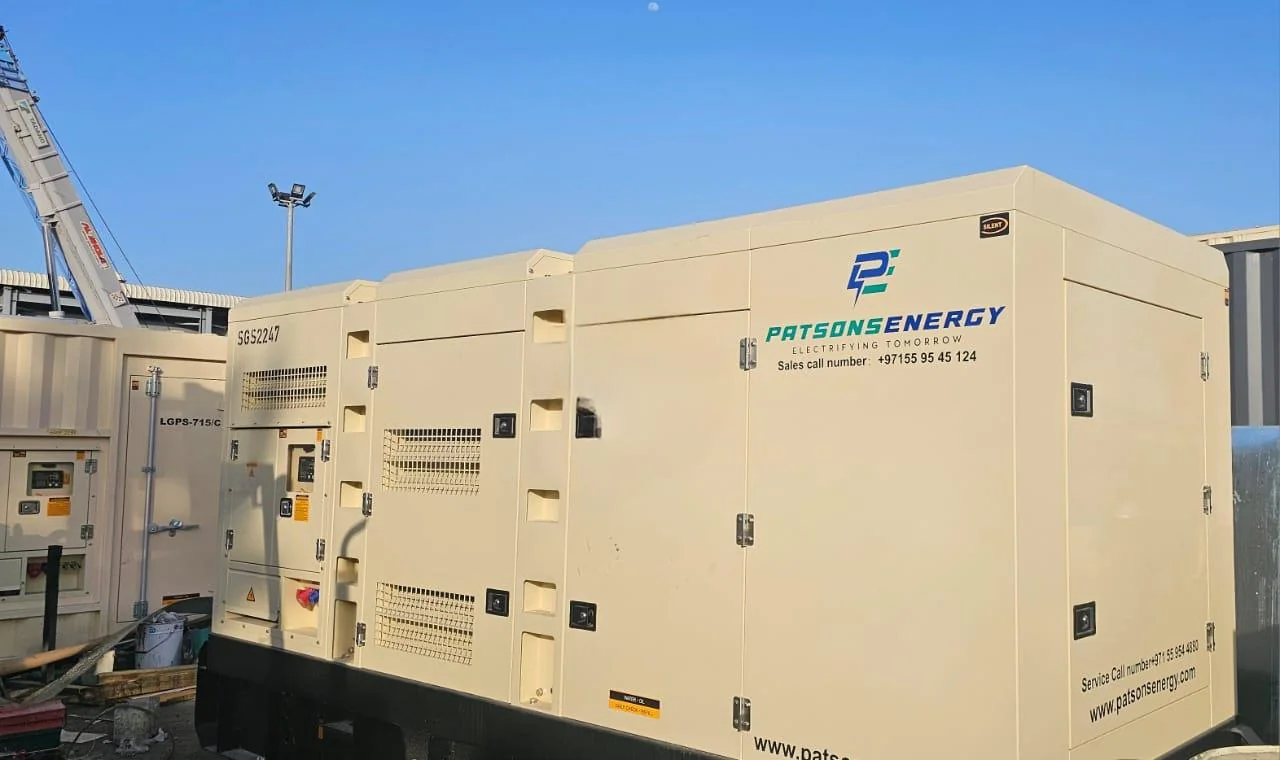
Generator FAT guide UAE
Plan a factory test that catches issues before delivery.
A useful factory acceptance test checks the finished generator against the approved documents, exercises the functions that matter on site and records anything that still needs attention.
Before the test
Agree the checks and acceptance criteria first
Testing without an agreed reference creates disputes rather than evidence. The latest approved technical submittal, general arrangement, bill of materials, control philosophy and inspection and test plan should be available to the manufacturer and witness team.
The procedure should identify the test instruments, calibration status, load steps, duration, data intervals, witness points and responsibility for observations. Any test that cannot be completed at the factory should be listed as a site acceptance item.
- Approved generator rating, duty, voltage and frequency
- Approved engine, alternator, controller and major auxiliaries
- Latest mechanical, electrical and interface drawings
- Defined test sequence, load steps and acceptance limits
- Witness, hold and document-review points
- Site-only tests and excluded interfaces clearly identified
Inspection
Check identity, workmanship and maintainability before operation
Swipe horizontally to view all columns
| Inspection area | Typical checks |
|---|---|
| Equipment identity | Nameplates, model and serial numbers, rating labels and approved component makes |
| Mechanical package | Base frame, mounts, guards, fasteners, cooling, fuel, exhaust, leaks and fluid levels |
| Enclosure or container | Dimensions, doors, seals, louvers, attenuation, lifting points, finish and access |
| Electrical work | Panel labels, cable support, terminations, earthing, batteries, chargers and auxiliary supplies |
| Maintainability | Routine-service clearances, drain points and credible access for major-component work |
| Documentation | Drawings, manuals, certificates, test forms and agreed spare-parts information |
-
Equipment identity
- Typical checks
- Nameplates, model and serial numbers, rating labels and approved component makes
-
Mechanical package
- Typical checks
- Base frame, mounts, guards, fasteners, cooling, fuel, exhaust, leaks and fluid levels
-
Enclosure or container
- Typical checks
- Dimensions, doors, seals, louvers, attenuation, lifting points, finish and access
-
Electrical work
- Typical checks
- Panel labels, cable support, terminations, earthing, batteries, chargers and auxiliary supplies
-
Maintainability
- Typical checks
- Routine-service clearances, drain points and credible access for major-component work
-
Documentation
- Typical checks
- Drawings, manuals, certificates, test forms and agreed spare-parts information
Operating test
Exercise controls, protection and agreed load steps
The load test should follow the contract procedure for the exact generator rating and duty. A common staged sequence is useful for planning, but it is not an automatic acceptance standard and should not replace the approved procedure.
Swipe horizontally to view all columns
| Test stage | Evidence to record |
|---|---|
| Pre-start | Fluid levels, battery condition, emergency-stop reset, breaker state and controller readiness |
| Start and no-load | Start sequence, voltage, frequency, pressure, temperature, charging and abnormal noise or vibration |
| Staged load | kW, kVA, current by phase, voltage, frequency, power factor, temperatures and pressures at agreed intervals |
| Load changes | Transient response and recovery against the agreed project limits |
| Controls and protection | Alarms, trips, emergency stop, remote signals and automatic functions included in scope |
| Cool-down and shutdown | Unloading, cool-down timing, stop sequence, leaks, final alarms and post-test condition |
-
Pre-start
- Evidence to record
- Fluid levels, battery condition, emergency-stop reset, breaker state and controller readiness
-
Start and no-load
- Evidence to record
- Start sequence, voltage, frequency, pressure, temperature, charging and abnormal noise or vibration
-
Staged load
- Evidence to record
- kW, kVA, current by phase, voltage, frequency, power factor, temperatures and pressures at agreed intervals
-
Load changes
- Evidence to record
- Transient response and recovery against the agreed project limits
-
Controls and protection
- Evidence to record
- Alarms, trips, emergency stop, remote signals and automatic functions included in scope
-
Cool-down and shutdown
- Evidence to record
- Unloading, cool-down timing, stop sequence, leaks, final alarms and post-test condition
Release
Close the observations and keep a clear test record
- 01
Record
Capture readings, serial numbers, instrument details, photographs and witness attendance on controlled forms.
- 02
Classify
Separate release-blocking defects from minor items and site-dependent checks.
- 03
Correct
Assign owners and dates, complete repairs or adjustments and provide evidence of retest where needed.
- 04
Approve
Obtain the required signatures or documented release status under the project inspection plan.
- 05
Handover
Include the accepted reports, drawings, manuals and remaining site tests in the delivery record.
Frequently asked questions
Common questions
Can’t find what you need? Send us your requirement and our team will help.
What is a generator factory acceptance test?
A generator FAT is a planned inspection and test at the manufacturing facility to compare the completed package with approved documents, verify agreed functions and record operating results before dispatch.
Does every generator FAT require a load-bank test?
The test scope is contractual. Load-bank testing is commonly used to verify operation under controlled electrical load, but the required steps, duration, acceptance criteria and witness requirements must be agreed for the project.
Can a consultant witness generator testing in Dubai?
Yes. Patsons can plan customer, consultant or third-party witness points at its Dubai facility when they are included in the inspection and test plan and coordinated before production.
Does factory testing replace site acceptance testing?
No. Site testing confirms installation-dependent items such as switchgear interfaces, fuel and exhaust systems, ventilation, remote signals, automatic transfer and operation with the actual connected loads.